



How India’s 2026 Waste Management Rules Shape Communities
India is taking a major step toward cleaner cities and sustainable living. Starting April 1, urban and rural local bodies along with large waste producers must follow stricter Solid Waste Management (SWM) Rules, 2026, replacing the decade-old waste management framework.
Notified by the Ministry of Environment, Forest and Climate Change, these new rules aim to reduce landfill pressure, promote waste segregation and push waste processing closer to where it is generated. Here’s a simple, citizen-friendly breakdown of what changes and why it matters.
Why Are New Waste Rules Needed?
India generates nearly 1.85 lakh tonnes of solid waste daily, according to data from the Central Pollution Control Board. While collection has improved, large volumes still end up in landfills, creating pollution, health risks and environmental damage.
The new rules aim to:
- Reduce landfill dependency
- Increase recycling and reuse
- Promote waste processing at source
- Hold large waste generators accountable
- Strengthen monitoring and compliance
The focus now shifts from simply collecting waste to managing it responsibly from the start.
Who Must Now Follow Stricter Rules?
A major change is the responsibility placed on Bulk Waste Generators (BWGs) entities that produce large amounts of waste daily.
A bulk generator includes buildings or institutions that meet any of these conditions:
- Floor area 20,000 sq. m. or more
- Water use 40,000 litres per day or more
- Waste generation 100 kg or more per day
- Government buildings
- Universities and hostels
- Large residential societies
- Commercial complexes
- Hotels and offices
These entities must now process or responsibly manage their own waste, instead of relying entirely on municipal bodies.
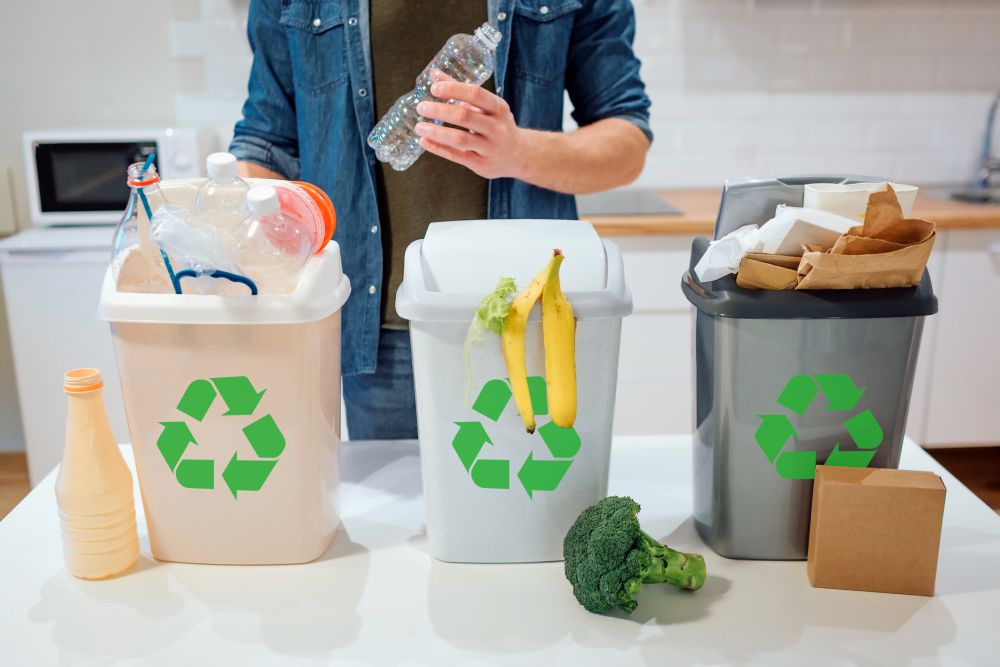
Four Types of Waste Must Be Segregated at Source
The four mandatory streams are:
- Wet Waste – kitchen and food waste, biodegradable material.
- Dry Waste – paper, plastics, metal, glass, packaging material.
- Sanitary Waste – diapers, sanitary pads, medical hygiene waste.
- Special Care Waste – items like batteries, tube lights, electronic waste.
Segregation makes recycling and processing easier and reduces landfill dumping.
Bulk Generators Must Process Waste at Source
Under Extended Bulk Waste Generator Responsibility, large waste producers must:
- Process wet waste on-site wherever possible
- Arrange environmentally safe waste transport and treatment
- Obtain certification if on-site processing isn’t possible
- Comply with centralized monitoring systems
The aim is to reduce municipal burden and encourage decentralized waste processing.
Landfills Become the Last Option
The new rules follow a waste hierarchy, prioritizing:
- Prevention and reduction
- Reuse
- Recycling
- Recovery (including waste-to-energy)
- Disposal
Landfills will now accept only Non-recyclable waste, Non-energy recoverable waste & Inert material. Local bodies sending unsegregated waste to landfills will face higher landfill fees, encouraging proper segregation and processing.
What This Means for Citizens
For most households, the biggest change will be strict segregation at home. For housing societies and institutions, waste processing systems will become increasingly necessary.
If implemented properly, the rules could lead to:
- Cleaner neighborhoods
- Reduced landfill pollution
- Better recycling systems
- Healthier urban living
- More sustainable cities
Final Thought
The new Solid Waste Management Rules signal a shift from “collect and dump” to “segregate and manage responsibly.” Success, however, depends not just on rules but on citizen participation, responsible institutions, and consistent enforcement. Cleaner cities begin with what we do at home every day.
Join us at Eco Sustain Expo & showcase breakthrough solutions in waste management, circular economy, clean technologies and sustainable urban living and learn how businesses, communities and citizens can build a greener future together.
Register Today: https://ecosustainexpo.in/