



How AI and Automation Are Changing E-Waste Recycling in India
Electronic waste is growing rapidly across India as consumers and industries replace smartphones, laptops, batteries, appliances, and other electronic devices more frequently than ever before. With digital adoption increasing across sectors, managing electronic waste has become a major environmental and industrial challenge.
Traditional recycling methods are often slow, labor-intensive, and inefficient when handling large volumes of complex electronic waste. This is why AI and automation are becoming important in modern e-waste recycling in India. These technologies are helping recycling facilities improve sorting accuracy, recover valuable materials efficiently, reduce risks, and support sustainable waste management.
India’s Growing E-Waste Problem
India is one of the world’s largest generators of electronic waste, and the volume continues to rise every year. Electronic devices contain materials such as plastics, copper, aluminum, lithium, gold, silver, and hazardous substances that require proper handling and processing.
Manual recycling methods often struggle to separate these materials efficiently. Informal recycling practices can also lead to environmental pollution, unsafe working conditions, and loss of valuable resources.
To address these challenges, many recycling companies are now adopting AI-powered systems and automated technologies.
How AI Is Improving E-Waste Sorting
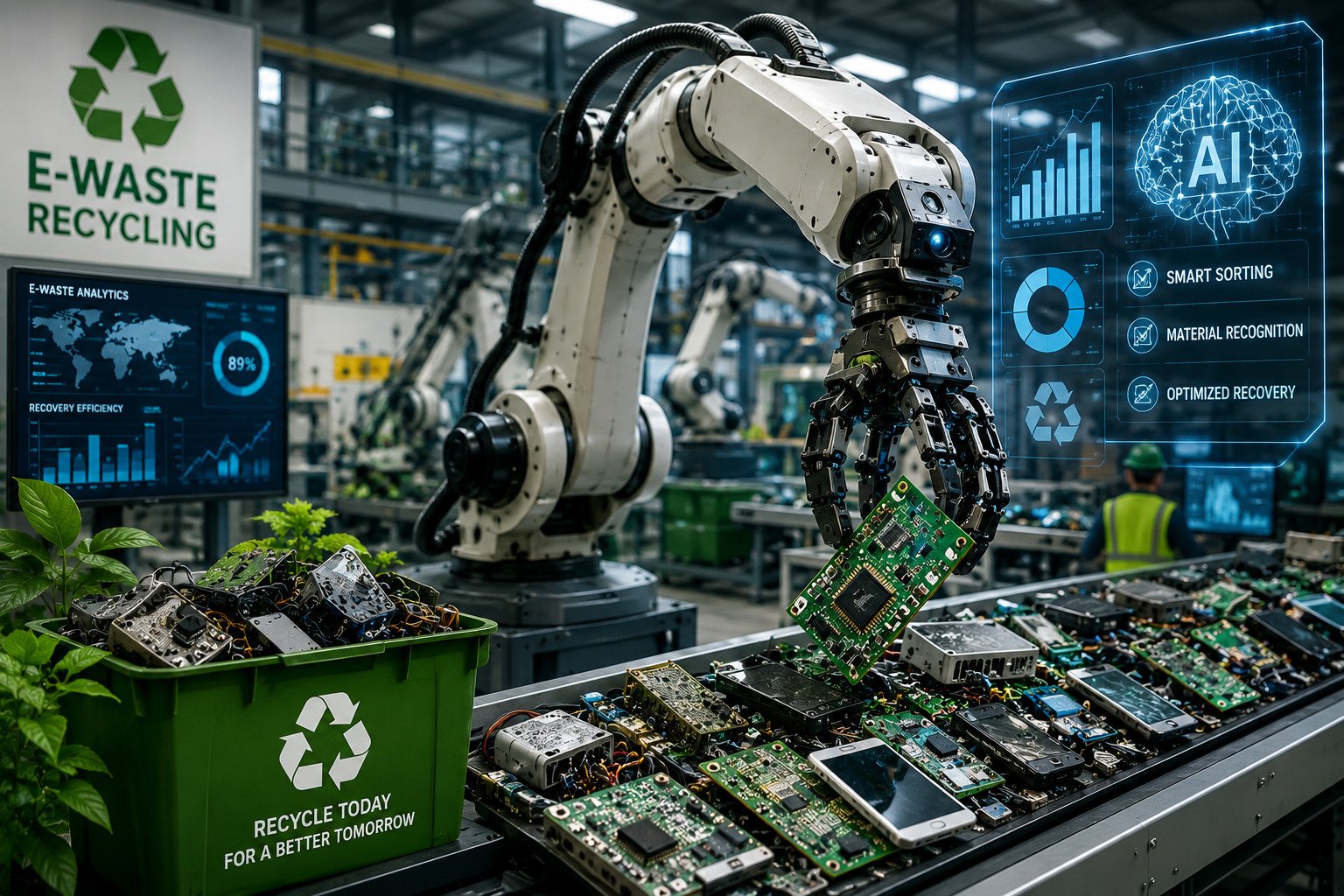
Sorting is one of the most important stages in e-waste recycling. AI-based systems use machine learning, sensors, and computer vision to identify different materials and electronic components quickly and accurately.
Smart cameras and software can recognize batteries, plastics, cables, metals, and circuit boards on conveyor belts in real time. This reduces human error and improves material separation efficiency.
AI-powered sorting systems can also identify hazardous components before processing begins, helping improve workplace safety and environmental protection.
Automation Is Making Recycling Faster
Automation is helping recycling plants process e-waste more efficiently. Robotic arms, automated shredders, conveyor systems, and sensor-based separators are reducing the need for manual dismantling.
Automated technologies can safely handle fragile or hazardous components such as lithium-ion batteries and damaged electronics. They also improve the recovery of valuable materials like copper, aluminum, gold, and rare earth metals.
Advanced systems such as magnetic separators, optical sorting, and eddy current separation are improving recycling accuracy while reducing material loss.
Better Tracking and Smart Waste Management
AI is also improving e-waste management beyond recycling plants. Smart tracking systems help companies monitor electronic products from usage to disposal.
Data analytics and predictive technologies can estimate future e-waste generation trends, helping businesses and authorities plan recycling infrastructure more effectively.
Some urban waste management systems are also introducing AI-enabled collection systems and smart bins to improve e-waste collection efficiency.
Supporting India’s Circular Economy
AI and automation are supporting India’s push toward a circular economy by improving resource recovery and reducing dependence on raw material extraction.
Recovered metals and reusable materials from electronic waste can be reintroduced into manufacturing industries, reducing environmental impact and supporting sustainable production.
As sectors such as electric vehicles, renewable energy, and electronics manufacturing continue growing, the demand for recycled materials is also expected to increase.
Challenges in Adoption
Despite the benefits, adopting AI and automation in e-waste recycling still comes with challenges. Advanced recycling equipment and AI technologies require significant investment, which can be difficult for smaller facilities.
The industry also needs skilled professionals to manage advanced systems and technologies. Better awareness, improved collection systems, and stronger enforcement of e-waste regulations will also be important for future growth.
The Future of E-Waste Recycling in India
The future of e-waste recycling in India is expected to become more technology-driven and efficient. AI, robotics, and automation will continue improving sorting, dismantling, tracking, and material recovery processes.
With growing environmental awareness, government initiatives, and increasing industrial demand for recycled materials, advanced recycling technologies are likely to become a key part of India’s sustainability and circular economy goals.
As electronic waste continues to rise, AI and automation will play a major role in building a cleaner, smarter, and more resource-efficient recycling industry in India.