



What Is Smart Waste Management and How Does It Work?
Waste management is becoming one of the biggest challenges for growing cities, industries, and residential communities. Overflowing bins, inefficient collection routes, rising operational costs, and increasing environmental concerns are pushing organizations to look for smarter solutions. This is where smart waste management is changing the way waste is collected, monitored, and processed.
Instead of relying on traditional collection methods, smart waste management uses technologies like IoT sensors, AI, GPS tracking, and data analytics to improve efficiency and reduce waste-related problems. From smart cities to commercial buildings and industrial zones, this modern approach is helping organizations create cleaner and more sustainable environments.
What Is Smart Waste Management?
Smart waste management is a technology-driven system that improves the collection, monitoring, sorting, and disposal of waste. It uses connected devices and real-time data to make waste handling faster, cleaner, and more cost-effective.
Traditional waste collection systems often follow fixed schedules, whether bins are full or not. This leads to unnecessary fuel consumption, overflowing bins, and inefficient operations. Smart waste management solves these problems by collecting real-time information from waste bins and disposal systems.
The goal is simple:
- Reduce waste collection costs
- Improve operational efficiency
- Minimize environmental impact
- Increase recycling rates
- Create cleaner public spaces
Today, many smart cities around the world are investing heavily in smart waste management technologies to improve urban sustainability.
How Does Smart Waste Management Work?
Smart waste management works through a combination of connected technologies and automated monitoring systems.
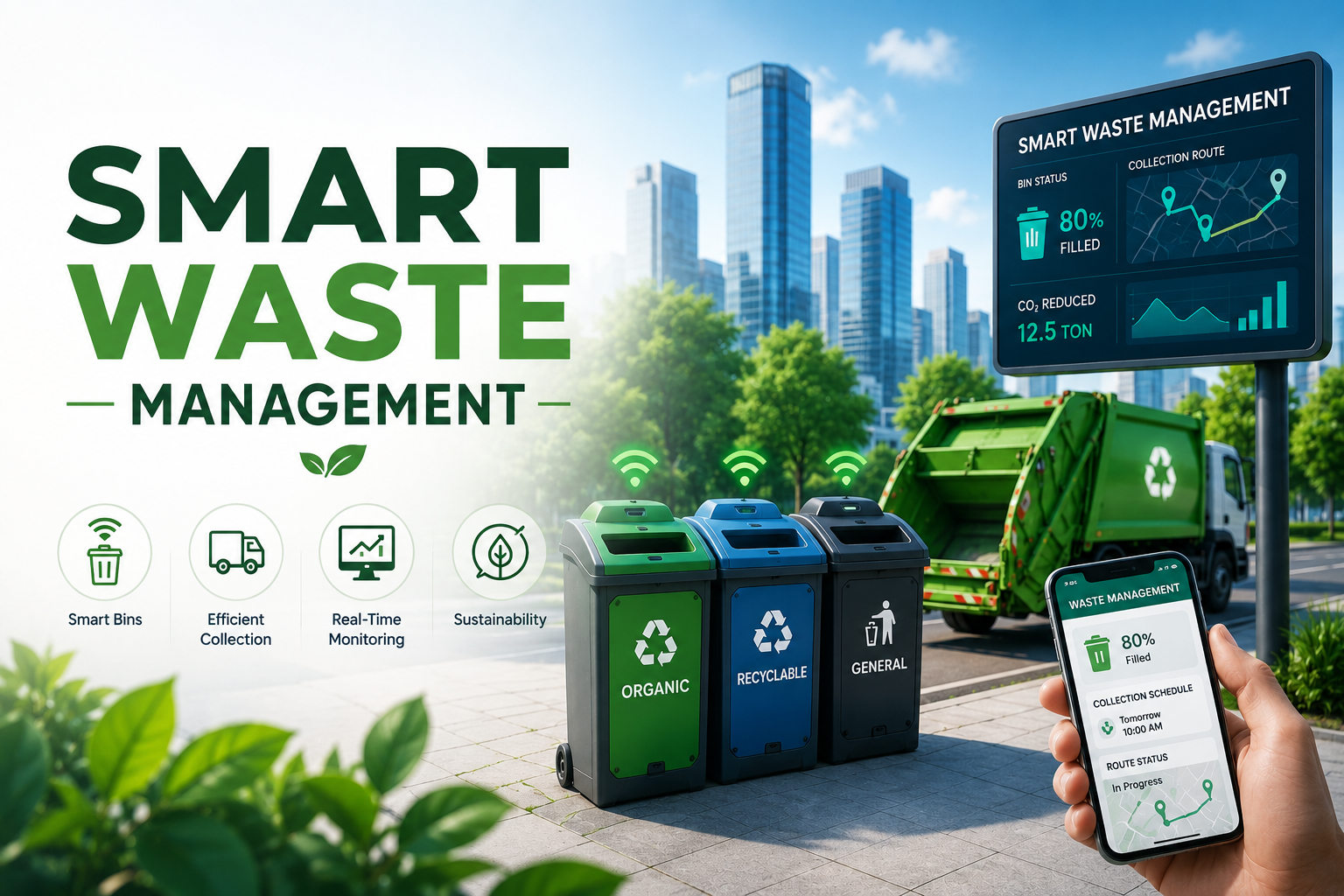
1. Smart Sensors in Waste Bins
Special sensors are installed inside waste bins to monitor:
- Fill levels
- Temperature
- Weight
- Moisture levels
These sensors continuously send data to a central monitoring platform. When a bin reaches a certain capacity, the system automatically alerts waste collection teams.
This prevents overflowing bins and avoids unnecessary collection trips.
2. Real-Time Data Monitoring
The collected data is analyzed in real time through cloud-based software or management dashboards. Waste management companies and municipal authorities can monitor:
- Which bins are full
- Collection priorities
- Waste generation patterns
- Bin locations
This improves visibility and allows better decision-making.
3. Route Optimization
One of the biggest advantages of smart waste management is route optimization.
Using GPS and AI-powered software, collection vehicles follow optimized routes based on which bins actually need emptying. This helps reduce:
- Fuel consumption
- Traffic congestion
- Collection time
- Vehicle wear and tear
As a result, companies can lower operational costs while improving service quality.
4. Automated Waste Sorting
Some advanced smart waste management systems use AI and machine learning to separate recyclable and non-recyclable waste automatically.
These systems can identify materials such as:
- Plastic
- Metal
- Paper
- Glass
- Organic waste
Automated sorting improves recycling accuracy and reduces landfill waste.
5. Data Analytics and Reporting
Smart waste management platforms also generate detailed reports and analytics. Organizations can track:
- Waste generation trends
- Recycling performance
- Operational efficiency
- Carbon emission reduction
These insights help businesses and municipalities improve long-term sustainability strategies.
Key Technologies Used in Smart Waste Management
Several modern technologies are powering smart waste management systems today.
Internet of Things (IoT)
IoT devices connect bins, sensors, vehicles, and monitoring systems to enable real-time communication.
Artificial Intelligence (AI)
AI helps analyze waste patterns, optimize routes, and improve waste sorting processes.
GPS Tracking
GPS technology helps monitor waste collection vehicles and improve route planning.
Cloud Computing
Cloud platforms store and process large amounts of waste management data securely.
Big Data Analytics
Analytics tools help authorities understand waste generation behavior and improve planning.
Benefits of Smart Waste Management
Smart waste management offers several advantages for cities, industries, and residential communities.
Improved Collection Efficiency
Collection teams only visit bins that actually need servicing, saving time and resources.
Reduced Operational Costs
Optimized routes and fewer unnecessary trips reduce fuel and maintenance expenses.
Cleaner Public Areas
Overflowing bins can be avoided through real-time monitoring and faster response times.
Better Environmental Sustainability
Reduced fuel consumption and increased recycling help lower carbon emissions.
Enhanced Recycling Rates
Automated sorting systems improve recycling efficiency and reduce landfill dependency.
Better Decision-Making
Real-time analytics provide valuable insights for future waste management planning.
Applications of Smart Waste Management
Smart waste management systems are widely used across different sectors.
Smart Cities
Municipal corporations use smart bins and route optimization systems to improve urban cleanliness.
Residential Communities
Gated communities and apartment complexes use smart waste monitoring to improve waste collection schedules.
Commercial Buildings
Shopping malls, office complexes, and hotels use smart systems to manage high volumes of waste efficiently.
Industrial Facilities
Factories and manufacturing plants use smart waste management to handle industrial waste safely and sustainably.
Hospitals and Healthcare Facilities
Healthcare organizations use advanced monitoring systems to manage medical waste more effectively.
Future of Smart Waste Management
The future of smart waste management looks highly promising. With rapid urbanization and increasing environmental awareness, governments and businesses are adopting more intelligent waste solutions.
Emerging trends include:
- AI-powered recycling robots
- Solar-powered smart bins
- Predictive waste analytics
- Autonomous waste collection vehicles
- Blockchain-based recycling tracking
As smart cities continue to grow, smart waste management will play a major role in building cleaner, greener, and more sustainable communities.
Conclusion
Smart waste management is transforming the way waste is collected, monitored, and processed. By combining IoT, AI, GPS tracking, and real-time analytics, organizations can improve efficiency, reduce operational costs, and support environmental sustainability.
From smart bins and route optimization to automated sorting systems, these technologies are helping cities and businesses move toward a cleaner future. As demand for sustainable urban infrastructure increases, smart waste management will continue to become an essential part of modern waste handling systems.