



How AI and Automation Are Transforming Sludge Management Systems
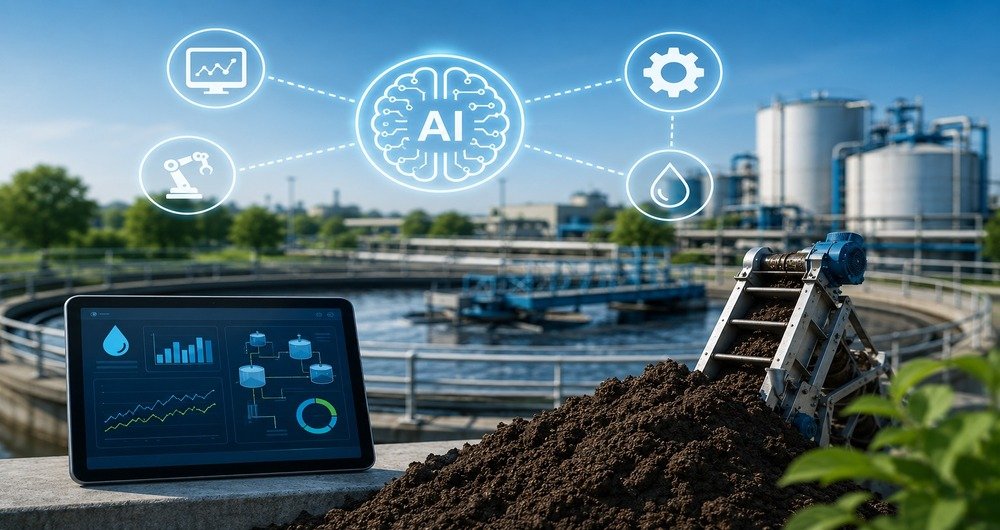
Industries across the world are under increasing pressure to reduce their environmental impact while improving operational efficiency. One area seeing rapid technological advancement is sludge management, where Artificial Intelligence (AI) and automation are helping facilities handle wastewater byproducts more effectively. Traditionally, sludge treatment has relied on manual monitoring, routine maintenance, and fixed operating parameters, often leading to higher energy use, inconsistent performance, and increased disposal costs.
Today, AI-driven solutions are enabling treatment plants to monitor processes in real time, predict potential issues, and optimize operations with minimal human intervention. From manufacturing facilities to municipal treatment plants, these technologies are transforming the way sludge is processed, making wastewater treatment more sustainable, cost-effective, and reliable.
Why Smarter Sludge Management Is Important
Sludge is the semi-solid material left behind after wastewater treatment. It contains organic matter, microorganisms, and other contaminants that must be treated before disposal or reuse. Poor sludge management can increase operational costs, create environmental risks, and make it difficult for facilities to comply with regulatory standards.
Modern sludge management aims to reduce sludge volume, improve treatment efficiency, recover valuable resources, and minimize waste. AI and automation help achieve these goals by providing greater visibility into plant operations and enabling data-driven decision-making.
AI’s Role in Optimizing the Activated Sludge Process
The activated sludge process is one of the most widely used biological treatment methods for removing organic pollutants from wastewater. It depends on maintaining the right balance of microorganisms, oxygen levels, and nutrient concentrations to ensure effective treatment.
Managing these variables manually can be challenging because wastewater characteristics often change throughout the day. AI systems continuously analyze data from sensors that monitor dissolved oxygen, pH, flow rate, and sludge concentration. Based on this information, the system can automatically adjust aeration and other process parameters to maintain optimal conditions.
By improving process stability, AI helps reduce energy consumption, enhance treatment efficiency, and minimize common operational problems such as sludge bulking or poor settling.
Automation in Industrial Wastewater Treatment
Industries such as pharmaceuticals, food processing, chemicals, textiles, and manufacturing generate wastewater with varying compositions. This makes industrial wastewater treatment a complex process that requires constant monitoring and adjustment.
Automation simplifies these operations by controlling equipment such as pumps, valves, aerators, and chemical dosing systems. Instead of relying on manual intervention, automated systems respond instantly to changes in wastewater quality and flow rates.
Some key benefits of automation include:
- Consistent treatment performance
- Reduced energy and chemical consumption
- Faster response to process changes
- Lower operational costs
- Improved worker safety by reducing manual handling
By combining automation with AI, facilities can improve overall plant efficiency while maintaining compliance with environmental regulations.
Enhancing Industrial Effluent Treatment with Data Analytics
Every industrial sector produces wastewater with unique characteristics. For example, wastewater from a food processing plant differs significantly from that of a pharmaceutical or chemical manufacturing facility. This makes industrial effluent treatment highly dependent on accurate monitoring and process control.
AI-powered analytics can process thousands of data points every minute, helping operators identify trends that might otherwise go unnoticed. The system can detect unusual pollutant loads, recommend operational adjustments, and even predict potential treatment failures before they occur.
This proactive approach enables industries to maintain consistent discharge quality while reducing unnecessary chemical use and minimizing operational disruptions.
Predictive Maintenance Improves Reliability
Equipment failures can lead to unexpected downtime, increased maintenance costs, and interruptions in wastewater treatment. AI helps overcome this challenge through predictive maintenance.
Using sensors installed on critical equipment such as pumps, blowers, centrifuges, and mixers, AI continuously monitors operating conditions including vibration, temperature, and power consumption. When the system detects patterns associated with wear or malfunction, it alerts maintenance teams before a breakdown occurs.
This allows facilities to schedule maintenance more efficiently, extend equipment lifespan, and avoid costly emergency repairs.
AI in Sewage Sludge Treatment
AI is also improving sewage sludge treatment in municipal wastewater facilities. Smart monitoring systems optimize processes such as sludge digestion, dewatering, and drying by continuously analyzing operational data.
These improvements help treatment plants reduce disposal costs while increasing opportunities for resource recovery. Optimized digestion processes can enhance biogas production, while better dewatering reduces transportation and handling expenses.
As cities focus on sustainable waste management, AI is helping transform sewage sludge from a disposal challenge into a valuable resource for renewable energy and nutrient recovery.
Environmental and Business Benefits
The adoption of AI and automation delivers advantages that extend beyond operational efficiency. By optimizing treatment processes, industries can significantly reduce their environmental footprint while improving business performance.
Some of the key benefits include:
- Lower energy consumption through optimized aeration and equipment operation
- Reduced chemical usage with precise dosing systems
- Improved compliance with environmental regulations
- Better water recovery and reuse opportunities
- Lower sludge disposal costs
- Increased operational reliability through predictive maintenance
These improvements support both sustainability goals and long-term cost savings, making AI an attractive investment for modern wastewater treatment facilities.
The Future of Sludge Management
The future of wastewater treatment will rely on intelligent, connected systems that combine AI, automation, Internet of Things (IoT) sensors, and cloud-based monitoring platforms. These technologies will enable treatment plants to operate more efficiently, respond quickly to changing conditions, and make informed decisions using real-time data.
Rather than replacing plant operators, AI serves as a powerful decision-support tool, helping teams improve productivity and maintain consistent treatment performance. As environmental regulations become more stringent and industries continue to prioritize sustainability, smart technologies will become an essential part of wastewater treatment operations.
Conclusion
AI and automation are reshaping the future of sludge management by making treatment processes more efficient, reliable, and sustainable. Whether it’s optimizing the activated sludge process, improving industrial wastewater treatment, enhancing industrial effluent treatment, or advancing sewage sludge treatment, these technologies help facilities reduce costs while meeting environmental responsibilities.
As industries continue to embrace digital transformation, intelligent sludge management systems will play a vital role in supporting cleaner production, resource conservation, and sustainable wastewater treatment practices for years to come.