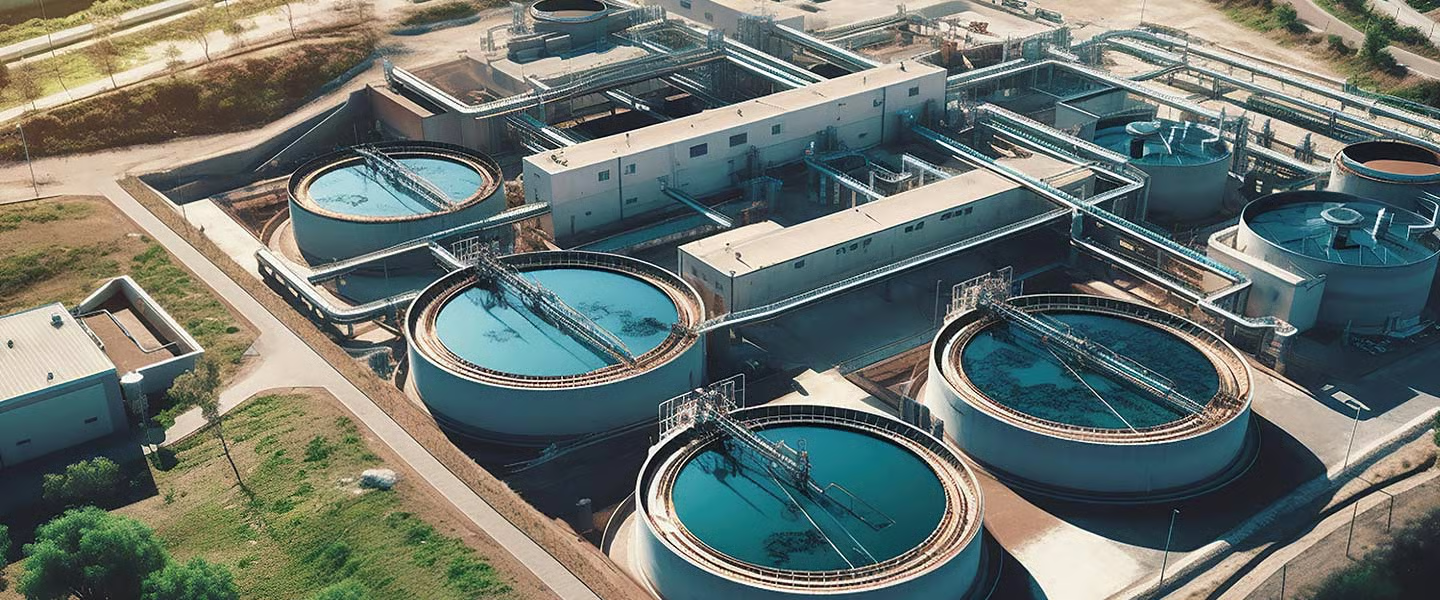
As industries accelerate toward smarter and more sustainable operations, wastewater treatment is undergoing a significant transformation. Traditional systems are no longer enough to meet stricter environmental regulations, rising operational costs, and growing sustainability expectations. Digitalization—powered by IoT, AI, and real-time monitoring; is redefining how industries manage wastewater efficiently and responsibly.
The Shift from Conventional to Smart Systems
Conventional wastewater treatment depends on manual checks, periodic sampling, and reactive decision-making. This often results in inefficiencies, delays, and higher operational risks.
Digital solutions enable:
- Continuous monitoring of water quality
- Automated process optimization
- Predictive maintenance
- Data-driven decision-making
This transition allows industries to move beyond compliance and focus on performance, efficiency, and sustainability.
Role of IoT in Wastewater Management
IoT connects treatment systems through sensors that track key parameters like pH, turbidity, and dissolved oxygen in real time. These sensors provide constant data flow, helping operators make faster and more accurate decisions.
Key benefits include:
- Remote monitoring across facilities
- Reduced manual intervention
- Early fault detection
- Improved compliance with regulations
With IoT, industries gain better visibility and control over their wastewater processes.
Artificial Intelligence: Enhancing Efficiency
AI analyzes data collected from IoT systems to identify trends and predict issues before they occur. It enables smarter decision-making and process optimization.
AI-driven advantages:
- Predictive maintenance reduces downtime
- Optimized chemical and energy usage
- Forecasting of inflow and load variations
- Improved treatment consistency
This leads to cost savings and enhanced operational performance.
Real-Time Monitoring: A Critical Advantage
Real-time monitoring allows instant detection of deviations in wastewater quality. Instead of waiting for lab results, operators can act immediately.
Impact on industries:
- Faster response to contamination
- Reduced risk of non-compliance
- Better ESG reporting transparency
- Efficient resource utilization
This is particularly valuable for sectors like chemicals and pharmaceuticals.
Digitalization is transforming wastewater treatment into a smarter, more sustainable system. Industries that adopt these technologies will gain a strong competitive edge while reducing environmental impact.
If you’re looking for industrial wastewater recycling technologies for manufacturing, AI-based wastewater monitoring systems for industries, environmental solutions trade show Hyderabad, or sustainable water management solutions for process industries in India, this is the platform to showcase and scale your innovations.
Book your stall now and position your brand among key decision-makers actively seeking next-generation wastewater solutions.