



How Sludge Drying Reduces Industrial Waste and Improves Sustainability
Industrial development supports economic growth, but it also creates large volumes of wastewater residue from manufacturing and processing activities. Industries such as textiles, pharmaceuticals, chemicals, food processing, paper mills, and engineering plants generate sludge during wastewater treatment operations. Managing this waste safely has become a major environmental challenge for modern industries. To address these concerns, many companies are now investing in sludge drying technologies to improve waste management efficiency and environmental performance.
Traditional disposal methods such as landfilling and open dumping increase operational costs and create risks including groundwater contamination, foul odors, and greenhouse gas emissions. Industries are now adopting sludge drying solutions to reduce waste volume, improve handling, and support sustainable manufacturing practices. These systems help businesses lower disposal costs while improving compliance with environmental regulations.
What Is Sludge Drying?
Sludge drying is the process of removing moisture from waste generated by Effluent Treatment Plants (ETPs), Sewage Treatment Plants (STPs), and industrial wastewater treatment facilities. Since sludge contains a very high percentage of water, drying converts it into a lighter and more manageable material that is easier to transport, store, or reuse.
Industries commonly use technologies such as:
- Thermal dryers
- Paddle dryers
- Rotary drum dryers
- Belt dryers
- Solar drying systems
These systems are designed to reduce moisture content while improving operational efficiency and reducing environmental impact.
Benefits of Sludge Drying
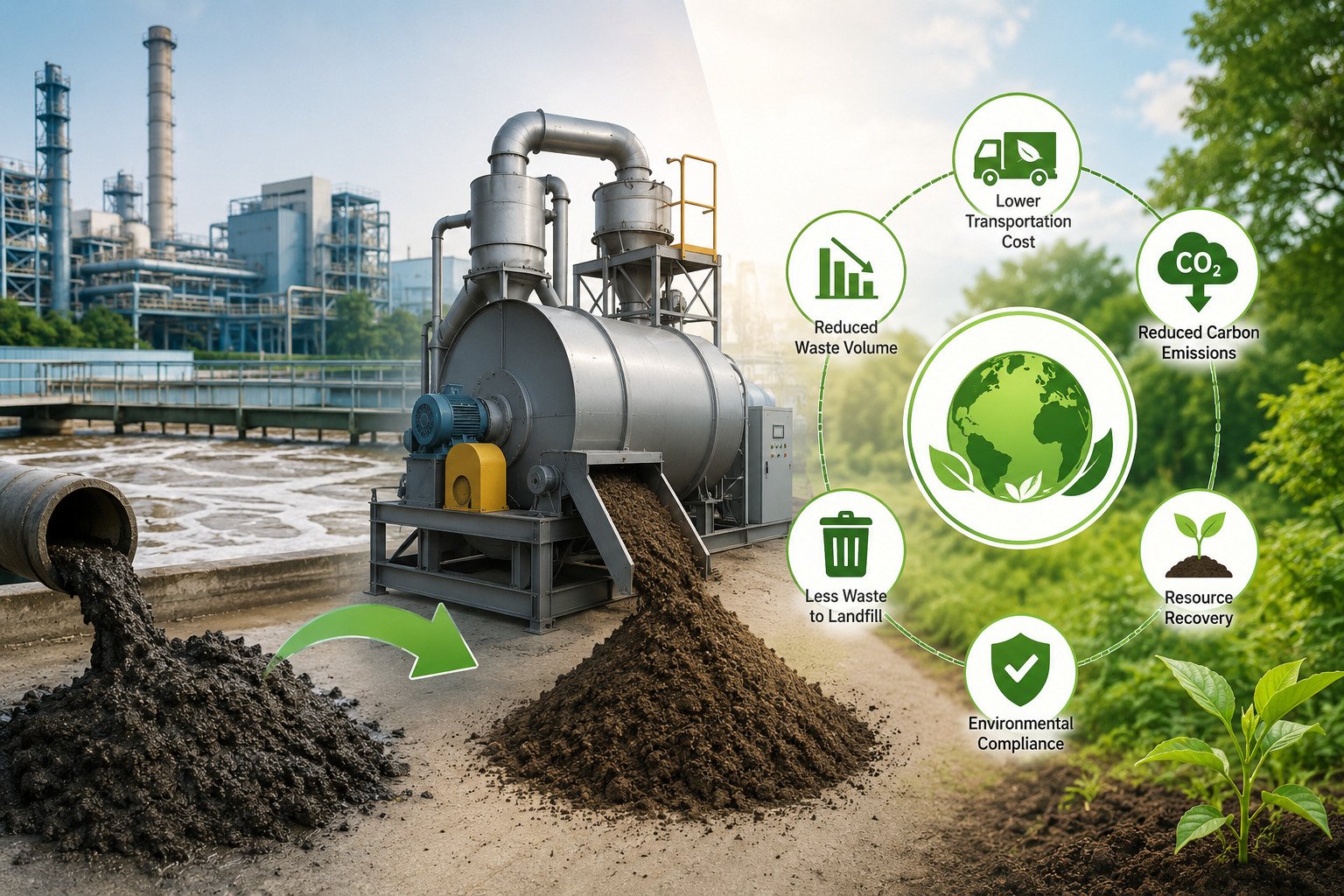
One of the biggest advantages of sludge drying is significant volume reduction. Wet residue can contain up to 80% moisture, making it bulky and difficult to manage. By removing water content, industries can dramatically reduce waste volume and minimize landfill dependency.
This process helps industries:
- Reduce waste storage requirements
- Lower transportation frequency
- Improve waste handling efficiency
- Decrease disposal expenses
Smaller waste volumes also reduce pressure on treatment facilities and landfill sites, contributing to more sustainable industrial operations.
Another important benefit is lower transportation cost. Wet industrial residue is heavy and expensive to transport. Dry material becomes lighter, reducing fuel usage and logistics expenses. Reduced transportation requirements also help lower carbon emissions and improve overall energy efficiency.
Environmental Advantages of Sludge Drying
Protecting the environment is one of the key reasons industries are adopting sludge drying technologies. Untreated waste may contain pathogens, toxic chemicals, heavy metals, and harmful organic compounds. Improper disposal can pollute soil and groundwater while creating unpleasant odors around industrial facilities.
Drying systems stabilize waste by reducing biological activity and moisture content. Advanced thermal systems can also eliminate harmful microorganisms and pathogens, improving hygiene and safety.
Key environmental benefits include:
- Reduced odor emissions
- Better groundwater protection
- Lower greenhouse gas emissions
- Improved workplace safety
- Reduced environmental pollution
As environmental regulations become stricter across industries, companies are focusing on cleaner and more responsible waste management practices.
Another major advantage is resource recovery. Modern industries are increasingly adopting circular economy practices where waste materials are reused instead of discarded. Processed industrial residue can sometimes be used in waste-to-energy projects, cement manufacturing, or bioenergy production. This reduces landfill disposal while promoting sustainable resource utilization.
Industries Using Sludge Drying Systems
Many sectors are now investing in sludge drying systems to improve sustainability and operational performance. Industries using these technologies include:
- Textile manufacturing
- Pharmaceutical production
- Chemical processing plants
- Food and beverage industries
- Paper and pulp mills
- Municipal wastewater treatment plants
- Oil and gas industries
These sectors generate large amounts of wastewater residue daily and require efficient waste treatment solutions to meet environmental standards and reduce operating costs.
The growing demand for sustainable manufacturing is also encouraging industries to modernize their wastewater treatment systems. Automated monitoring, energy-efficient equipment, and smart control systems are helping businesses improve productivity while reducing environmental impact.
Future of Sludge Drying Technology
The future of sludge drying technology is closely linked with industrial sustainability and resource conservation. Companies are increasingly investing in energy-efficient systems that use heat recovery, renewable energy integration, and automated controls to improve performance.
Modern treatment systems are becoming more advanced with features such as AI-based monitoring, remote operation, and optimized energy consumption. These innovations help industries improve waste management efficiency while reducing operational expenses.
Industrial sustainability platforms such as Eco Sustain Expo showcase the latest developments in wastewater treatment, recycling, and environmental technologies. These initiatives encourage industries to adopt cleaner processes and eco-friendly solutions for long-term sustainability.
In addition, governments and pollution control authorities are implementing stricter environmental regulations related to industrial waste disposal and wastewater management. Businesses that adopt advanced treatment technologies can improve compliance while strengthening their Environmental, Social, and Governance (ESG) performance.
Conclusion
Today, sludge drying has become an essential part of sustainable industrial waste management. By reducing waste volume, lowering transportation costs, minimizing pollution, and supporting resource recovery, sludge drying helps industries build cleaner and more efficient operations. As industries continue moving toward greener manufacturing and circular economy practices, sludge drying will play a major role in improving environmental sustainability and responsible industrial development.