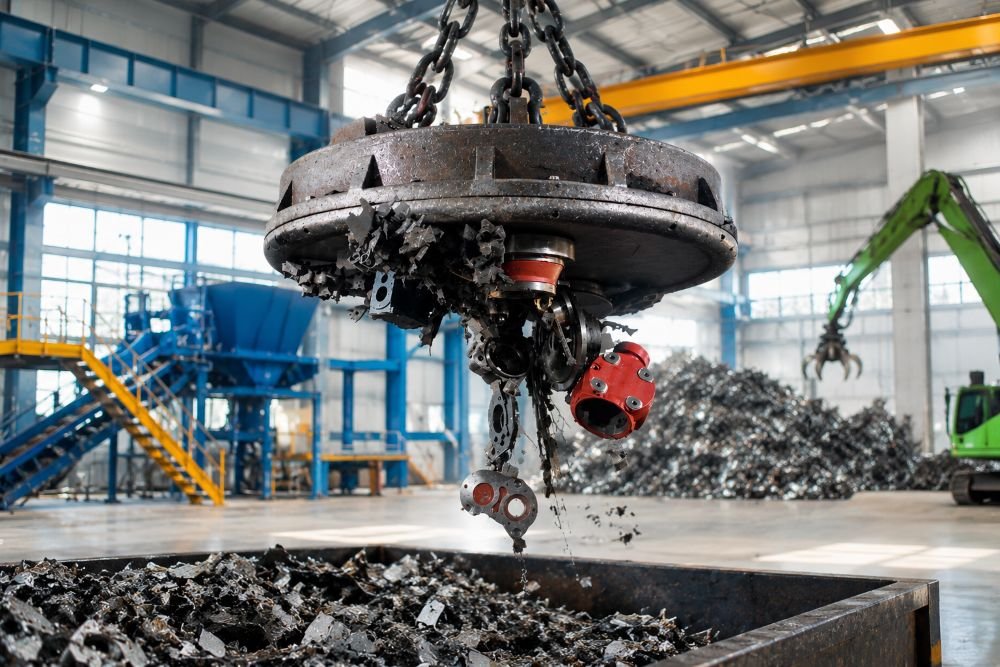
As industries worldwide focus on sustainability and resource efficiency, advanced recycling technologies are becoming essential for modern waste management. Among these innovations, magnetic separation technology has emerged as one of the most effective solutions for improving recycling efficiency and recovering valuable materials from waste streams.
What is Magnetic Separation?
Magnetic separation is a process used to separate ferrous and magnetic materials from non-magnetic waste using magnetic force. This technology helps efficiently recover metals such as iron and steel from mixed waste streams.
Magnetic separators are widely used in:
- Recycling plants
- Scrap processing industries
- E-waste recycling facilities
- Plastic recycling operations
- Mining and mineral processing industries
The technology plays a major role in improving material purity, operational efficiency, and recycling accuracy.
How Magnetic Separation Works
Magnetic separation systems use powerful magnets to attract and remove magnetic metals from waste materials moving through conveyors or processing lines.
Common types of magnetic separators include:
- Overband magnetic separators
- Drum magnetic separators
- Eddy current separators
- Suspended magnetic separators
-
- Importance of Magnetic Separation in Recycling Operations
- Improves recovery of valuable ferrous metals
- Enhances waste sorting and recycling efficiency
- Reduces landfill waste and material contamination
- Supports automated and cost-effective recycling operations
- Promotes circular economy and sustainable resource recovery
Applications of Magnetic Separation Technology
Magnetic separation systems are widely used across multiple industries:
-
Scrap Metal Recycling: Helps recover iron and steel from industrial scrap and demolition waste.
-
E-Waste Recycling: Separates valuable metals from discarded electronic equipment and components.
-
Plastic Recycling: Removes metal contaminants from plastic waste streams to improve recycling quality.
-
Mining and Mineral Processing: Used to separate magnetic minerals from ore during extraction processes.
Advantages of Magnetic Separation Technology
Industries are increasingly adopting magnetic separation because of its multiple operational and environmental benefits:
- High metal recovery efficiency
- Low operational cost
- Reduced contamination in recyclable materials
- Environmentally friendly recycling process
- Improved resource utilization
- Enhanced recycling plant productivity
Future of Magnetic Separation in the Recycling Industry
As recycling operations become more advanced, magnetic separation technology is evolving with:
- AI-powered sorting systems
- Smart sensor integration
- Automated waste processing lines
- High-intensity magnetic separators
- Energy-efficient recycling equipment
Conclusion
Magnetic separation technology is transforming recycling operations by improving waste sorting, increasing metal recovery, and supporting sustainable industrial practices. As industries continue focusing on resource efficiency and environmental responsibility, advanced recycling technologies will become even more important in building a cleaner and more sustainable future.
Be part of the future of recycling innovation at Eco Sustain Expo 2026.