


Singapore’s Waste Management System: Recycling & Waste-to-Energy
When discussing waste management, many countries focus on separating waste into wet and dry categories. Singapore takes a different approach.
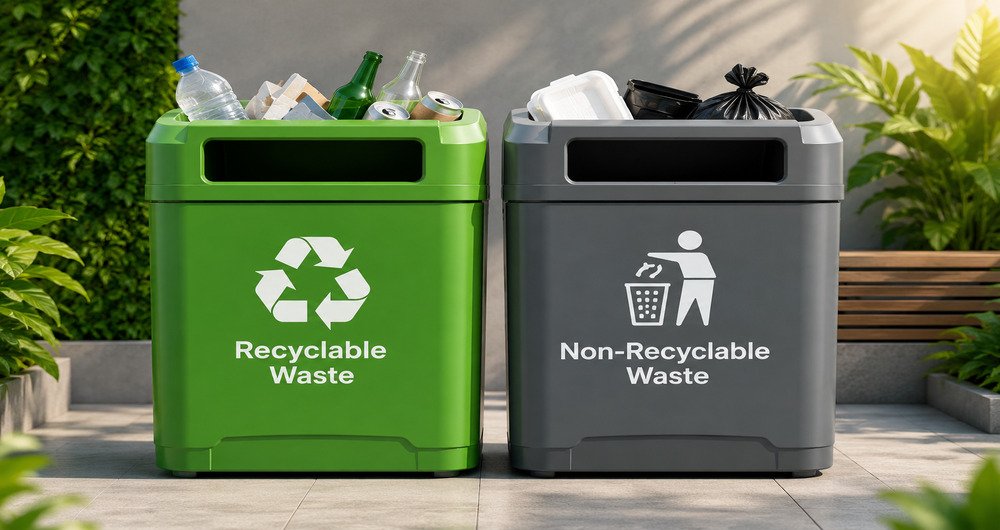
Instead of wet and dry waste segregation, Singapore’s residential waste management system primarily focuses on separating waste into two streams:
- Recyclable Waste
- Non-Recyclable Waste
This simple and efficient system has helped Singapore become one of the world’s most recognized examples of urban waste management and resource recovery.
How Singapore Segregates Waste
Singapore operates a co-mingled recycling system under the National Recycling Programme.
Residents can place paper, plastic, glass, and metal recyclables together in designated blue recycling bins. These materials are later sorted at recycling facilities before being processed.
Non-recyclable waste is disposed of through the general waste collection system and is typically sent to Waste-to-Energy (WTE) plants for treatment.
This approach simplifies recycling for residents while maximizing collection efficiency.
What Materials Are Recyclable in Singapore?
The most commonly accepted recyclable materials include:
- Paper Products
- Plastic Products
- Glass Products
- Metal Products
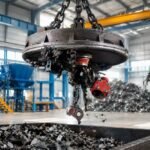
Among these, metals are particularly valuable because they can be recycled repeatedly without significant loss of quality.
What Happens to Non-Recyclable Waste?
Singapore has limited land availability, making traditional landfilling unsustainable.
To address this challenge, non-recyclable waste is sent to Waste-to-Energy (WTE) plants where it is incinerated under controlled conditions.
The process:
- Waste is collected from households and businesses.
- Non-recyclable waste is transported to WTE facilities.
- Incineration reduces waste volume by approximately 90%.
- Heat generated from the process is converted into electricity.
- Remaining ash is transported to Semakau Landfill.
This integrated system significantly reduces the amount of land required for waste disposal.
Waste-to-Energy: Turning Waste into Power
Singapore’s Waste-to-Energy infrastructure plays a critical role in the country’s sustainability strategy.
According to Singapore’s Ministry of Sustainability and the Environment, excess heat recovered from waste incineration contributes approximately 2% of Singapore’s electricity supply.
Beyond reducing landfill dependency, these facilities help recover value from waste that cannot be recycled.
Lessons Other Cities Can Learn from Singapore
Singapore demonstrates that effective waste management is not only about collecting waste but also about designing an integrated system that combines:
- Simple household segregation
- Efficient recycling infrastructure
- Waste-to-Energy technology
- Strong public participation
- Long-term sustainability planning
As urban populations continue to grow worldwide, Singapore’s model offers valuable insights into how cities can manage waste more efficiently while recovering resources and generating energy.
Conclusion
Singapore’s waste management system stands apart from conventional wet and dry waste segregation models. By focusing on recyclable and non-recyclable waste streams, supported by advanced Waste-to-Energy facilities and a robust recycling network, the nation has built a practical and scalable framework for sustainable urban waste management.
As cities around the world search for smarter waste solutions, Singapore’s approach provides a compelling example of how technology, policy, and public participation can work together to create a cleaner and more resource-efficient future.