



What Are Carbon Credits? A Simple Guide
As climate change continues to be a global concern, businesses, governments, and individuals are looking for practical ways to reduce their environmental impact. One concept that has gained significant attention in recent years is carbon credits. They have become an important tool in supporting sustainability efforts and helping organizations move toward their net-zero goals.
But what exactly do carbon credits mean, and how do they function? Let’s understand them in a simple way.
What Are Carbon Credits?
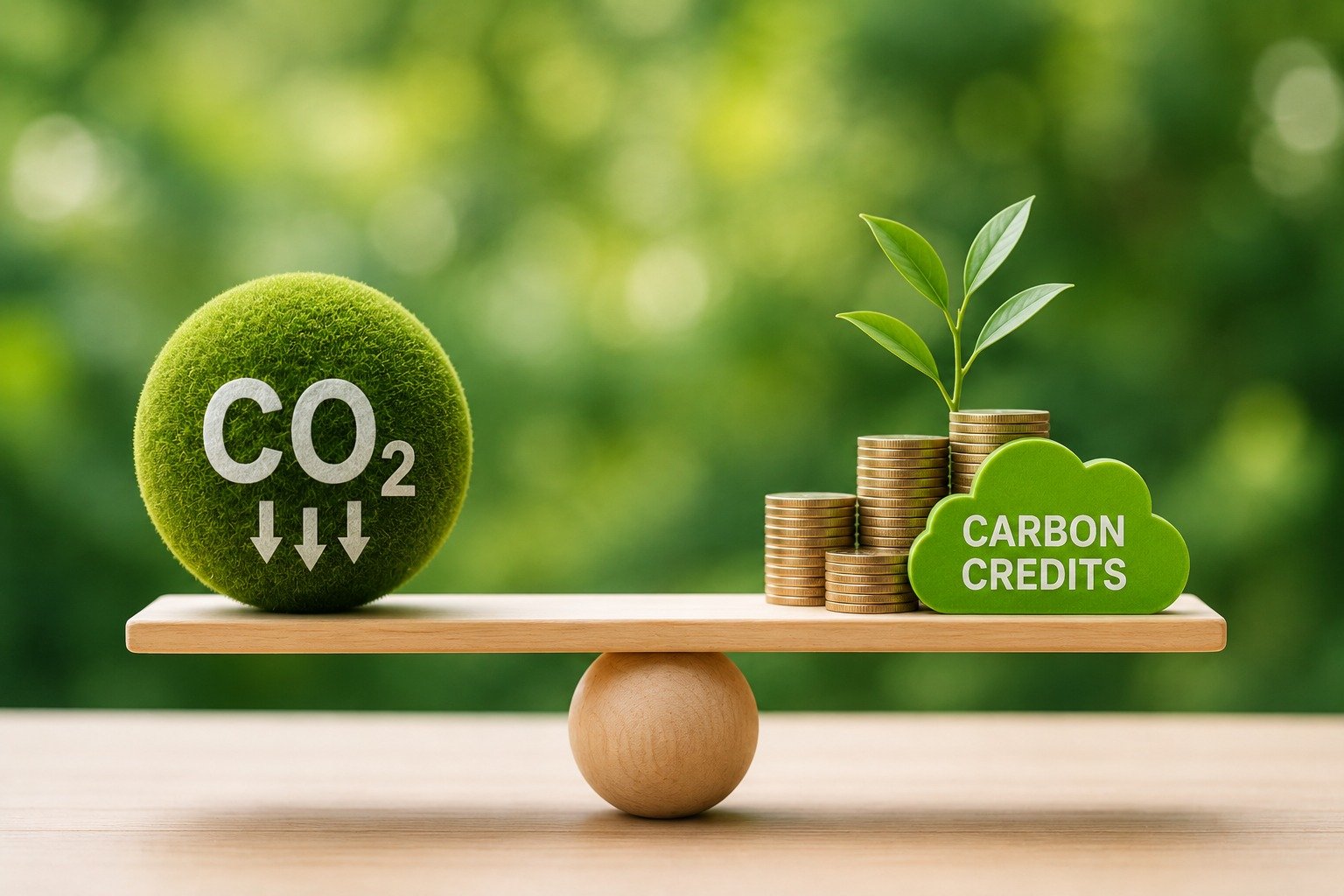
A carbon credit is a tradable certificate that represents the reduction, removal, or prevention of one metric ton of carbon dioxide (CO₂) or its equivalent greenhouse gases from entering the atmosphere.
In simple terms, carbon credits allow organizations to compensate for a portion of their emissions by supporting projects that reduce greenhouse gases elsewhere. These projects create measurable environmental benefits, which are converted into carbon credits that can be bought and sold.
One carbon credit equals one metric ton of carbon emissions reduced or removed.
Why Are Carbon Credits Important?
Despite advancements in clean technology, many industries still face challenges in completely eliminating their carbon emissions. Sectors such as manufacturing, transportation, construction, and energy production often require time and significant investment to transition to low-carbon operations.
Carbon credits help bridge this gap by:
- Encouraging investment in environmental projects
- Supporting renewable energy development
- Promoting sustainable business practices
- Creating financial incentives for reducing emissions
- Helping organizations achieve sustainability goals
They provide a market-based solution that rewards actions contributing to a cleaner environment.
How Do Carbon Credits Work?
The carbon credit process involves several key steps.
1. Environmental Projects Reduce Emissions
Carbon credits originate from projects designed to reduce, avoid, or remove greenhouse gas emissions. These projects can include:
- Solar and wind energy installations
- Reforestation and afforestation programs
- Methane capture from landfills
- Sustainable agricultural practices
- Energy efficiency improvements
- Waste management initiatives
Each project must demonstrate that it creates measurable environmental benefits.
2. Emission Reductions Are Verified
Before carbon credits can be issued, independent auditors assess the project’s impact. They verify that the claimed emission reductions are genuine, measurable, and would not have occurred without the project.
This verification process helps maintain trust and transparency within the carbon market.
3. Carbon Credits Are Issued
Once verified, carbon credits are generated based on the amount of emissions reduced or removed.
For example, if a renewable energy project prevents 5,000 metric tons of CO₂ emissions, it may receive 5,000 carbon credits.
4. Credits Are Purchased
Organizations that want to offset part of their carbon footprint can purchase these credits through carbon markets.
By buying carbon credits, companies financially support projects that contribute to reducing global emissions.
5. Credits Are Retired
After a carbon credit has been used to offset emissions, it is permanently retired from the market. This ensures that the same credit cannot be sold or claimed multiple times.
Types of Carbon Markets
Carbon credits are traded through two main types of markets.
Voluntary Carbon Market
In the voluntary market, companies and individuals choose to purchase carbon credits as part of their sustainability strategies. Participation is not legally required, but many organizations use voluntary credits to demonstrate environmental responsibility and strengthen their ESG commitments.
Compliance Carbon Market
Compliance markets operate under government regulations. Businesses that exceed permitted emission limits may be required to purchase carbon credits to meet legal requirements.
These markets are often part of national or international climate policies aimed at reducing overall greenhouse gas emissions.
Common Projects That Generate Carbon Credits
Several types of environmental initiatives can generate carbon credits.
Renewable Energy Projects
Solar farms, wind power installations, and other renewable energy projects help reduce reliance on fossil fuels and lower greenhouse gas emissions.
Forestry Projects
Tree planting and forest conservation projects absorb carbon dioxide from the atmosphere while supporting biodiversity and ecosystem restoration.
Waste Management Programs
Capturing methane from landfills or converting waste into energy prevents harmful gases from being released into the atmosphere.
Sustainable Agriculture
Practices such as regenerative farming and improved soil management can help store carbon in the soil while improving agricultural productivity.
Benefits of Carbon Credits
Carbon credits provide advantages for both businesses and the environment.
Environmental Benefits
- Lower greenhouse gas emissions
- Increased renewable energy adoption
- Better forest conservation
- Enhanced biodiversity protection
Business Benefits
- Support for sustainability and ESG goals
- Improved corporate reputation
- Increased stakeholder confidence
- Preparation for future environmental regulations
Economic Benefits
- New revenue opportunities for project developers
- Greater investment in green technologies
- Growth of sustainable industries and jobs
Are Carbon Credits Enough to Solve Climate Change?
While carbon credits are a valuable tool, they are not a complete solution. Experts generally agree that businesses should prioritize reducing emissions within their own operations before relying on offsets.
Effective climate action typically includes:
- Improving energy efficiency
- Switching to renewable energy
- Reducing waste
- Optimizing supply chains
- Investing in sustainable technologies
Carbon credits work best when used alongside these direct emission reduction efforts.
The Future of Carbon Credits
As governments strengthen climate policies and businesses face increasing pressure to improve sustainability performance, the demand for carbon credits is expected to grow. Advances in monitoring, reporting, and verification technologies are also making carbon markets more transparent and reliable.
For many organizations, carbon credits are becoming an essential part of long-term environmental strategies and net-zero commitments.
Conclusion
Carbon credits are a practical mechanism that helps finance projects that reduce or remove greenhouse gas emissions. By assigning value to environmental improvements, they encourage businesses and communities to invest in renewable energy, forest conservation, sustainable agriculture, and other climate-friendly initiatives.
While they should not replace direct efforts to reduce emissions, carbon credits play an important role in accelerating the transition to a more sustainable, low-carbon future. Understanding how they work can help businesses make informed decisions and contribute meaningfully to global climate action.