



What Is Carbon Offsetting and How Does It Work in 2026?
Climate change is no longer a distant concern—it’s a business reality. From multinational corporations to small businesses and even individual consumers, everyone is looking for ways to reduce their environmental impact. One concept gaining significant attention in 2026 is Carbon Offsetting.
But what exactly does it mean, and how does it work?
Understanding Carbon Offsetting
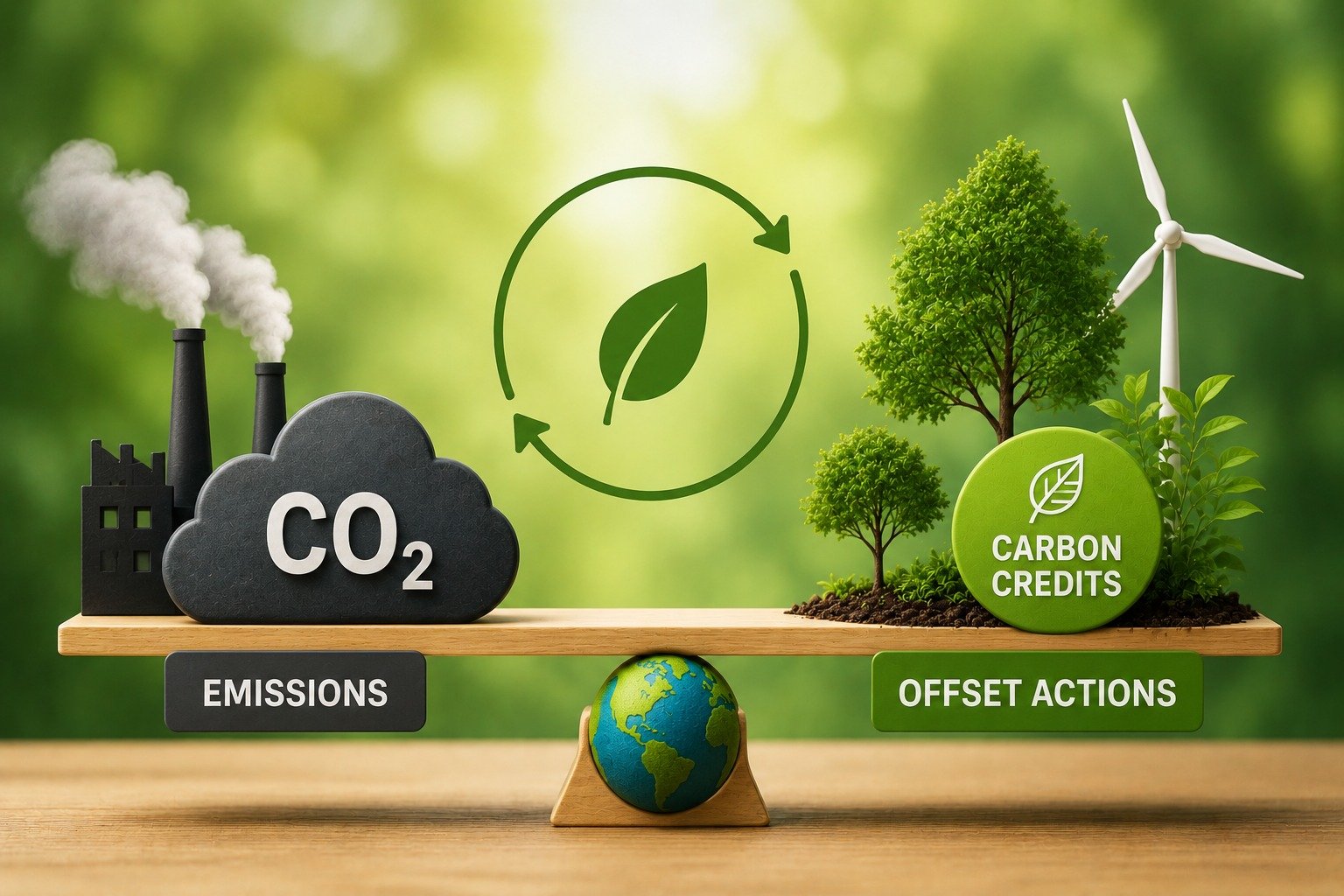
Carbon Offsetting is the process of compensating for greenhouse gas emissions by supporting projects that remove, reduce, or prevent an equivalent amount of carbon dioxide from entering the atmosphere.
Everyday activities such as manufacturing, transportation, electricity consumption, and business travel contribute to a carbon footprint. While reducing emissions should always be the priority, some emissions are difficult to eliminate immediately. This is where Carbon Offsetting becomes valuable.
For example, if a company emits 50 tonnes of carbon dioxide annually, it can offset those emissions by investing in projects that prevent or remove the same amount of greenhouse gases elsewhere.
Why Carbon Offsetting Matters in 2026
In 2026, sustainability expectations have evolved rapidly. Governments are introducing stricter environmental regulations, investors are evaluating companies based on ESG performance, and consumers increasingly support brands committed to sustainability.
As a result, Carbon Offsetting has become an important part of climate strategies because it helps organizations:
- Progress toward net-zero goals
- Address unavoidable emissions
- Strengthen sustainability initiatives
- Demonstrate environmental responsibility
- Contribute to meaningful climate action
However, experts agree that offsets should complement emission reduction efforts—not replace them.
How Does Carbon Offsetting Work?
The process is straightforward and involves a few key steps.
1. Measure Your Carbon Footprint
The first step is understanding how much you emit. Businesses typically assess emissions from:
- Energy consumption
- Transportation and logistics
- Manufacturing processes
- Business travel
- Supply chains
- Waste generation
Accurate measurement is essential for effective carbon footprint reduction.
2. Reduce Emissions Where Possible
Before purchasing offsets, organizations should lower emissions through operational improvements such as:
- Improving energy efficiency
- Switching to renewable energy
- Reducing waste
- Optimizing transportation
- Adopting cleaner technologies
Reducing emissions first ensures that Carbon Offsetting is used responsibly.
3. Purchase Carbon Credits
Once emissions have been minimized, businesses can invest in carbon credits to compensate for remaining emissions.
A carbon credit generally represents one metric ton of carbon dioxide equivalent that has been reduced, avoided, or removed from the atmosphere.
These credits are created from verified environmental projects and are bought and sold in regulated or voluntary markets.
4. Support Verified Projects
The funds from carbon credits help finance initiatives that deliver measurable environmental benefits. Common examples include:
Renewable Energy Projects
Supporting solar, wind, or hydro projects that reduce reliance on fossil fuels.
Reforestation and Afforestation
Planting and restoring forests that naturally absorb carbon dioxide.
Methane Capture
Capturing methane emissions from landfills and wastewater facilities before they reach the atmosphere.
Blue Carbon Projects
Protecting mangroves and coastal ecosystems that store significant amounts of carbon.
Many of these initiatives also create jobs, support local communities, and protect biodiversity.
Carbon Offsetting vs. Carbon Reduction
A common misconception is that Carbon Offsetting allows organizations to continue emitting without making changes. In reality, the most effective sustainability strategies follow a simple approach:
Reduce what you can. Offset what you can’t.
Direct emission reductions should always come first. Offsets are designed to address unavoidable emissions while businesses transition toward cleaner operations and technologies.
Benefits of Carbon Offsetting
When implemented responsibly, Carbon Offsetting offers several advantages:
- Accelerates global climate action
- Supports net-zero commitments
- Enables participation from organizations of all sizes
- Funds environmental and community projects
- Enhances corporate reputation and stakeholder trust
For many businesses, it also demonstrates a proactive commitment to sustainability.
Challenges to Consider
Despite its benefits, Carbon Offsetting has faced criticism over the quality and credibility of certain projects. Concerns include:
- Low-quality carbon credits
- Lack of transparency
- Risks of double counting
- Overreliance on offsets instead of emission reductions
These concerns have led to stricter standards, improved verification processes, and greater accountability across carbon markets in 2026.
The Future of Carbon Offsetting
The future of Carbon Offsetting lies in balance. Organizations are increasingly combining direct emission reductions with high-quality offsets, transparent reporting, and long-term sustainability investments.
Rather than being a standalone solution, Carbon Offsetting has evolved into a practical tool within broader environmental strategies.
Conclusion
As businesses and individuals strive for a more sustainable future, Carbon Offsetting offers a way to address emissions that cannot yet be eliminated. By prioritizing carbon footprint reduction, investing in credible carbon credits, and supporting meaningful climate action, organizations can make measurable progress toward their environmental goals.
The journey to net zero won’t happen overnight. But with thoughtful action and responsible implementation, Carbon Offsetting can help bridge the gap between today’s challenges and tomorrow’s climate ambitions.