




What Is a Waste Compactor? A Complete Guide to Types, Uses and Benefits
Managing waste has become more challenging than ever as industries expand and urbanization continues to grow. Every manufacturing unit, warehouse, shopping mall, hotel, or healthcare facility generates waste that must be handled efficiently to maintain cleanliness, reduce costs, and comply with environmental regulations. One technology that has transformed industrial waste handling is the waste compactor.
Rather than allowing waste to pile up in large bins, a waste compactor compresses it into a smaller volume, making storage, transportation, and disposal much more efficient. As businesses increasingly adopt sustainable practices, waste compactors have become an essential part of modern waste management systems.
What Is a Waste Compactor?
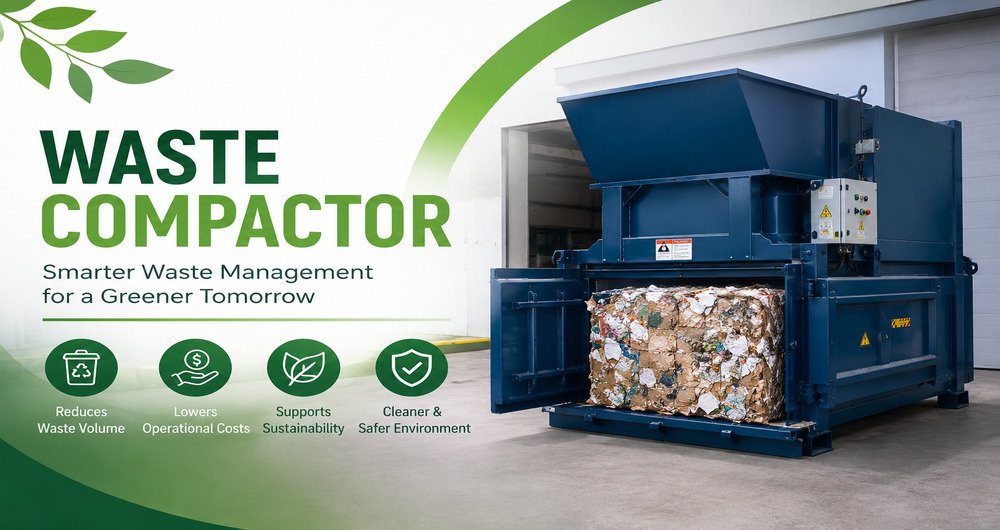
A waste compactor is a mechanical or hydraulic machine designed to compress different types of solid waste into dense, compact loads. By significantly reducing the volume of waste, the machine allows businesses to maximize container capacity, reduce collection frequency, and improve overall waste management efficiency.
Waste compactors are widely used to process paper, cardboard, plastic packaging, textiles, wood waste, municipal solid waste, and other non-hazardous industrial materials. Depending on the industry and waste type, compactors are available in different sizes and configurations to meet specific operational requirements.
How Does a Waste Compactor Work?
Although designs vary, the operating principle remains simple. Waste is loaded into a compression chamber where a powerful hydraulic ram applies pressure to compact the material. Once the waste reaches the desired density, it is stored inside a container until collection or recycling.
This process offers several operational benefits. Compacting waste means fewer overflowing bins, cleaner premises, and fewer vehicle trips for waste transportation. It also makes recycling easier by keeping waste organized and reducing contamination.
Types of Waste Compactors Used in Industries
Selecting the right waste compactor depends on the type and quantity of waste generated.
Stationary Waste Compactors
Stationary compactors are commonly installed in factories, logistics hubs, and recycling facilities that generate large volumes of dry waste. The compaction unit remains fixed while detachable containers are transported when full, making continuous operations possible.
Self-Contained Waste Compactors
These compactors are specially designed for wet waste generated by restaurants, hotels, food processing units, supermarkets, and hospitals. Their sealed construction prevents liquid leakage, minimizes unpleasant odors, and helps maintain hygienic surroundings.
Vertical Waste Compactors
Vertical compactors are ideal for businesses with limited floor space. Small warehouses, retail outlets, and commercial buildings often use them to compress cardboard, paper, and plastic packaging before recycling.
Horizontal Waste Compactors
Horizontal compactors are built for high-capacity operations where waste is generated continuously. They are commonly found in manufacturing plants, distribution centers, and municipal waste facilities due to their ability to process large volumes with minimal interruption.
Portable Waste Compactors
Portable compactors combine the compactor and container into a single movable unit. They are suitable for locations where waste collection points frequently change or where flexibility is important.
Why Industries Invest in Waste Compactors
For many organizations, installing a waste compactor is no longer simply about saving space. It is an investment that improves efficiency while supporting sustainability goals.
One of the biggest advantages is the significant reduction in waste volume. Compacted waste occupies much less space than loose waste, allowing businesses to use fewer containers and reduce storage requirements.
Transportation costs are also lowered because waste collection vehicles need fewer trips. This not only saves money but also reduces fuel consumption and carbon emissions.
A cleaner workplace is another important benefit. Overflowing waste bins attract pests, create unpleasant odors, and increase safety risks. Waste compactors help maintain an organized environment that supports employee health and operational safety.
Many organizations also use waste compactors to improve recycling programs. Properly compacted recyclable materials are easier to store, transport, and process, helping businesses divert more waste from landfills.
Industries That Commonly Use Waste Compactors
Many industries rely on waste compactors for efficient waste management, including:
- Manufacturing and engineering industries
- Warehousing and logistics companies
- Retail stores and shopping malls
- Hotels and hospitality businesses
- Hospitals and healthcare facilities
- Food processing and beverage industries
- Airports and railway stations
- Municipal waste management authorities
- Educational institutions
- Commercial office complexes
As waste generation increases, more sectors are recognizing the operational and environmental value of waste compaction.
Choosing the Right Waste Compactor
Before selecting a waste compactor, businesses should evaluate several factors, including the type of waste generated, daily waste volume, available installation space, maintenance requirements, and future expansion plans.
It is equally important to consider safety features such as emergency stop systems, overload protection, and automated controls. Choosing equipment that matches operational requirements ensures better performance and lower long-term operating costs.
Conclusion
A waste compactor is far more than a machine that compresses waste, it is a practical solution that helps industries improve operational efficiency, reduce waste management costs, create cleaner workplaces, and support sustainable business practices. Whether used in manufacturing plants, commercial buildings, healthcare facilities, or municipal waste management systems, the right waste compactor can deliver measurable economic and environmental benefits.
Businesses looking to stay informed about the latest innovations in waste management, recycling technologies, and sustainable industrial practices can explore Eco Sustain Expo. The platform connects industry professionals, technology providers, policymakers, and sustainability experts, making it an excellent destination for discovering solutions that are shaping the future of waste management and the circular economy.